A junk car can still hold measurable value, even if it no longer runs or cannot be sold privately.
In Calgary and Airdrie, junk vehicle value is assessed based on usable components and recyclable materials, not traditional resale price. A non-running vehicle may still contain engines, transmissions, catalytic converters, and structural metal that retain material or parts value.
Understanding how this value is determined helps vehicle owners make a confident decision before selling or arranging removal.
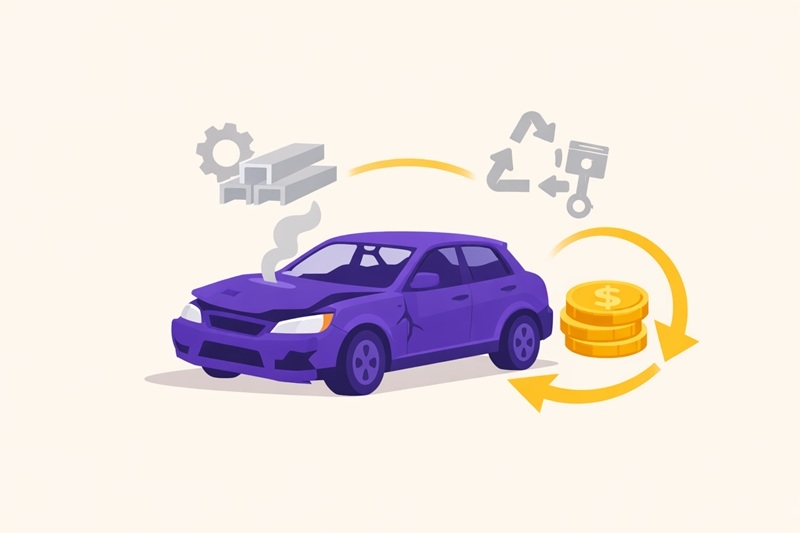
A vehicle does not become worthless simply because it stops operating.
Most end-of-life vehicles retain:
At this stage, assessment focuses on what can be recovered from the vehicle, not whether it can return to the road.
There is no universal flat price. Value depends on physical condition, completeness, and material content.
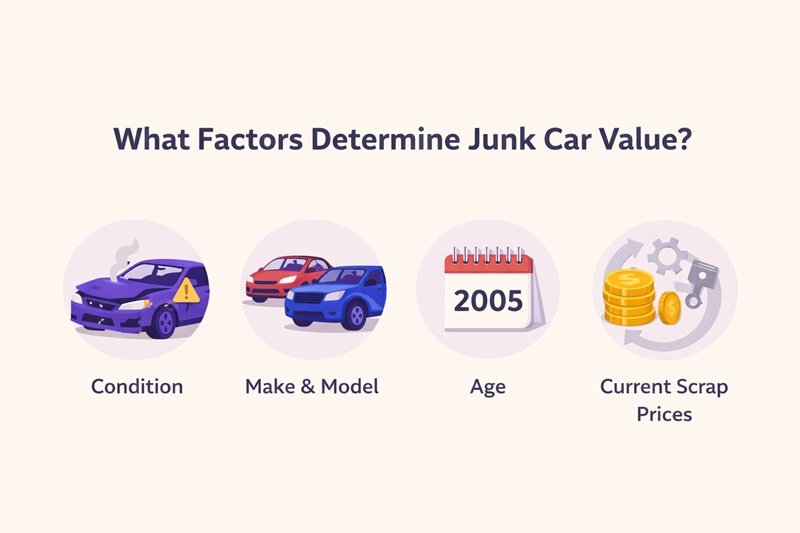
Mechanical and structural conditions have the greatest influence on component and material value.
Assessment considers:
Vehicles that remain intact typically retain more usable parts and recyclable metal than vehicles missing critical assemblies.
A running vehicle may hold additional component value. However, a non-running vehicle can still contain valuable parts and scrap metal.
Non-operational vehicles may still include:
Operational status affects valuation, but it does not eliminate underlying material worth.
Vehicle classification affects how much recoverable material is available.
Examples include:
Larger vehicles often contain greater metal volume, but overall condition remains more important than size alone.
High mileage and age often signal wear, but they do not automatically reduce a vehicle’s value to zero.
An older vehicle that remains complete may contain more usable parts than a newer vehicle with severe structural damage.
Condition outweighs model year.
Serious collision damage may eliminate resale viability, but it does not automatically remove component or scrap value.
Evaluation typically examines:
When repair costs exceed realistic resale potential, valuation shifts toward parts recovery and recyclable metal content.
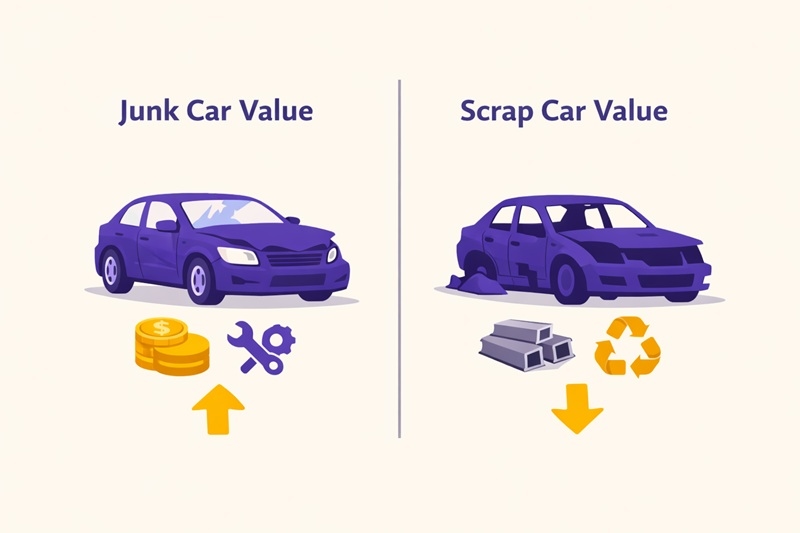
The terms "junk car" and "scrap car" are often used interchangeably, but they represent different valuation stages.
Junk car value may include reusable components and metal content.
Scrap car value applies when the vehicle is valued primarily for recyclable raw materials.
When a vehicle no longer contains meaningful reusable parts and is assessed mainly for its metal weight, it typically moves into the category of scrap car removal.
Both categories can retain measurable value. The difference depends on condition and component availability.
Location within Calgary or Airdrie does not change the intrinsic value of the vehicle itself.
However, logistical considerations may include:
These factors affect removal coordination, not the underlying material or component value.
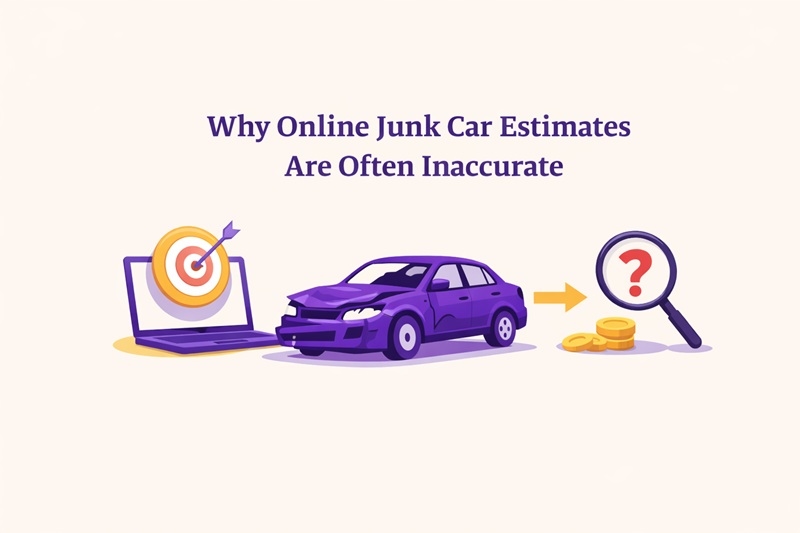
Online calculators generate rough estimates without inspecting actual condition.
Automated tools may fail to account for:
Because these systems rely on preset formulas, they often produce unrealistic numbers. Accurate valuation depends on detailed vehicle information.
A junk vehicle is typically worth selling when:
Understanding this difference helps owners move from disposal thinking to a value-based decision.
When usable components or recyclable materials remain, vehicle owners may choose to sell your junk car for cash through our Cash For Cars service instead of proceeding with simple disposal.
A condition-based assessment ensures that compensation reflects actual component integrity and material content.
This guide explains how valuation works. Final offers depend on accurate vehicle details.
To determine realistic junk car value, the following information is typically required:
Providing clear details leads to more precise evaluation.
Vehicle valuation is applied consistently across Calgary and Airdrie.
Assessment focuses on:
Neighborhood location does not change intrinsic worth. Only logistical coordination may vary.
Yes. Many non-running vehicles retain usable components and recyclable metal.
No. Condition and completeness matter more than model year.
Yes. Structural damage may prevent resale but still allow parts and metal recovery.
In many cases, yes. Recyclable metal retains measurable market value.
Junk car value is determined by usable components and recyclable material content — not resale potential.
Understanding this distinction helps vehicle owners in Calgary and Airdrie decide whether to pursue disposal or transition to a cash-for-cars solution.
Serving Calgary & Airdrie, Alberta
Buyers of end-of-life vehicles